Why We Made Tomorrow Trail Workbooks (And What's Next)
The story behind the Fox & Fern Tomorrow Trail series, seven titles, one job, and the parent feedback that changed how we built each page.
· 4 min read · Fox & Fern Books
When we started Fox & Fern Books, we had one specific complaint about workbooks. Walk into any bookstore in May and you’ll see the summer workbook wall, eight or ten brands, all promising to prevent the slide. Pick any of them up. They all have the same problem.
Too many pages.
A typical big-box summer workbook is 200 to 300 pages. Three months of summer is roughly 60 weekdays. That’s three or four pages a day, every weekday, with no skips. Almost no kid does this. Almost no parent makes them. So the workbook gets opened in late June, abandoned by mid-July, and ends up in the donate pile in September with two-thirds of the pages still blank.
Parents don’t talk about this because the workbook costs $9.99 and admitting it didn’t work feels like admitting a personal failure. But we’d sat through enough kitchen-table conversations to know it’s universal. And we thought: this is a design problem, not a parenting problem.
What we changed
Our Tomorrow Trail series is shorter. Each book is sized to be done, not just bought. The pages are designed for a five-to-ten minute working session, not a thirty-minute one. There are no full-page word searches taking up space that should be content. There’s no “review week” filler. Every page is doing a real job.
We also did something the big publishers don’t really do. We sequenced the skills in the order a teacher would actually want them reviewed. Reading comprehension before writing prompts that depend on it. Math facts before word problems that use them. Place value before adding multi-digit numbers. The order matters, and it’s the kind of thing only a former teacher notices when it’s wrong.
The seven titles
We launched with seven books, one per grade band:
- Pre-K → Kindergarten
- Kindergarten → Grade 1
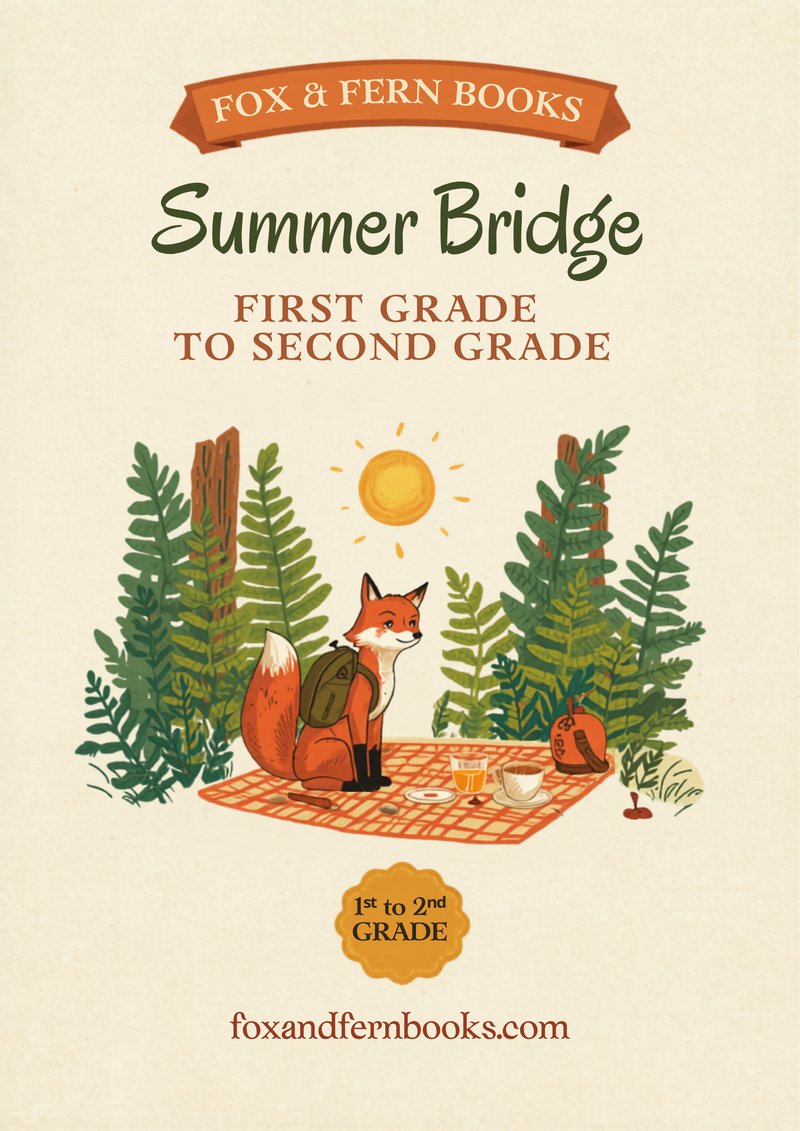
- Grade 1 → Grade 2
- Grade 2 → Grade 3
- Grade 3 → Grade 4
- Grade 4 → Grade 5
- Grade 5 → Grade 6
The split into grade bands instead of single grades was deliberate. A workbook for “Grade 2” doesn’t help a parent. They don’t want last year’s review, they want bridge-to-the-next-year. So every book is built for the summer between two grades, with the back half of the book leaning into what the upcoming grade will introduce in September.
What changed after the first round
We sent the first prints to a few dozen parents and asked for feedback. Two pieces came up over and over.
The first: parents wanted more white space. The pages we thought were “clean” still felt cluttered. We redesigned every interior to be even more generous with margins, which sounds trivial but changed the books significantly. A page with breathing room is a page a kid will actually do.
The second: parents wanted fewer instructions per page, not more. Our early drafts had a directions paragraph at the top of every activity. Parents told us their kids skipped it anyway, then asked the parent what to do, then a five-minute task became fifteen minutes of negotiation. We cut the directions to one short line. Now the page either explains itself or it gets pulled.
These are small changes individually. Together they make the difference between a workbook that gets done and one that doesn’t.
What’s next
We have three projects on the bench right now.
A Phonics & Sight Words series for K through Grade 2. We kept getting requests from parents whose kids needed extra reading-foundations support that the standard summer workbook format doesn’t cover. Coming next spring.
A Travel Activity Books line, same design philosophy, but built for the back of a car or the table on a plane. Mazes, logic puzzles, drawing prompts, light handwriting. Designed to occupy a kid for a real stretch without a screen, which is the actual job parents are hiring an activity book for.
And a quietly evolving handwriting workbook. We’ve been told too many times that the handwriting books on the market are either clinical and dull or cute and useless. We’re trying to find the third option.
What we’re not doing
We’re not making test-prep books. We’re not making “grade-level mastery” books. We’re not adding stickers, scratch-and-sniff layers, or QR codes that take you to a video. We make paper books that a kid can do quietly at the kitchen table while a parent makes coffee. That’s the whole product. That’s the whole company.
If you’ve used one of our Tomorrow Trail Activity Workbooks, thank you. If something didn’t work, if a page was confusing, if your kid hated a particular activity, if a section felt off-pace. We want to know. We’re a small studio and parent feedback is the only signal that actually moves the books. Email us at [email protected]. We read all of them.
That’s the story. Now back to the desk.
- #behind-the-books